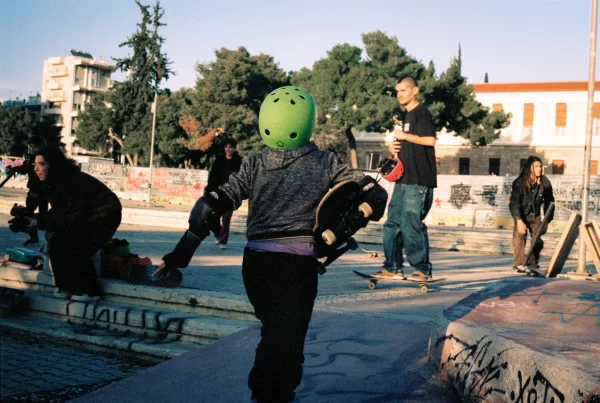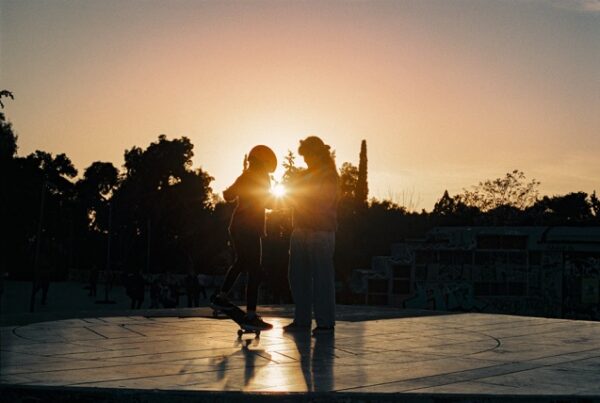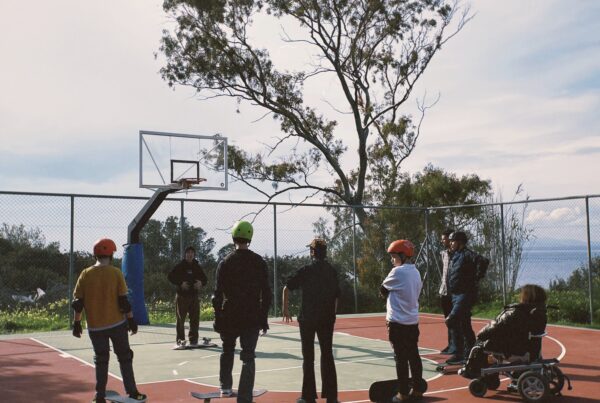

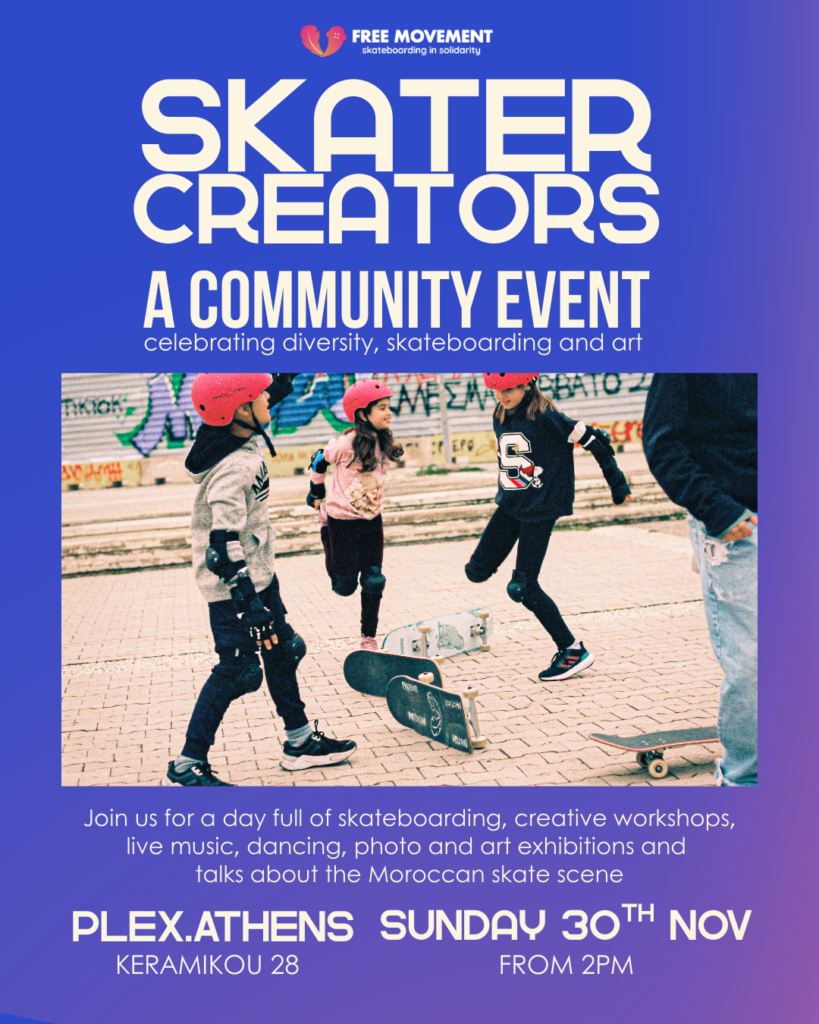
We write this as Free Movement and Beurdies, united by skateboarding, art, and a shared belief in community, creativity and freedom of movement. Our collaboration was built on a simple but powerful idea, to bring young people from different backgrounds together, to challenge stereotypes and to show that solidarity can travel further than any border.
This project was meant to be a meeting of worlds, North and South, Athens and Casablanca, stories that mirror each other across the Mediterranean. Together we wanted to inspire children from all walks of life to pick up a skateboard and see themselves reflect in it, to pass on what it gave to us… freedom, fearlessness and a sense of belonging. We wanted to show that skateboarding can challenge racism, class divisions and borders, creating a shared space of inclusion and imagination.
The reality told another story.
Despite two years of trying, preparation, secured funding, complete documentation and a clear cultural purpose, some members of the Beurdies collective were refused visas to travel to Greece. Their absence affected the impact, energy, collective creativity and exchange meant to take place between our communities.
What we experienced is not an isolated case. It is the direct result of a global system that privileges some bodies over others, that turns borders into filters of race and geography. This is not about paperwork. It is about power, about who is allowed to move, to be visible, to participate in culture, and to be part of the story.
Racism and criminalisation do not only exist in the streets or the media. They are embedded in the systems that judge people before they ever cross a border, systems that assess intentions, dreams and futures through deeply racialised assumptions. The refusal of their visas were justified through the unevidenced claim that applicants might “overstay”. This claim is not a neutral assessment. It reflects assumptions about the worthiness and trustworthiness of individuals based on nationality or race, rooted in the belief that their lives would automatically be “better” elsewhere. Across Europe, artists, students, and cultural practitioners from the Global South face disproportionately high rejection rates. As a result, young artists and skaters are systemically excluded from international spaces, not for lack of talent or contribution, but because where their passports were issued. These borders are not accidental. They reproduce the same colonial hierarchies and global inequalities that communities have been resisting for generations. The consequences extend beyond those denied entry, restricting cultural exchange and opportunities, and affecting entire communities.
Skateboarding in the SWANA region, and more broadly the Global South, needs visibility, recognition and opportunity. The skaters, photographers, illustrators, musicians and filmmakers working there need trust and inclusion, not suspicion and denial. Equality in skateboarding cannot exist without equality in mobility, representation and access.
One of our projects aims to confront the stereotypes often projected onto North Africans, as well as other migrant and refugee youth living in Athens. Ironically, the very racism we sought to challenge became the barrier that stopped our collaborators and friends from arriving. This exposed a truth we cannot ignore, discrimination is institutional. It is built into policies and practices that determine who is deemed “worthy” of participation and who is excluded.
We refuse to accept this as normal.
Skateboarding as a Social Development Tool
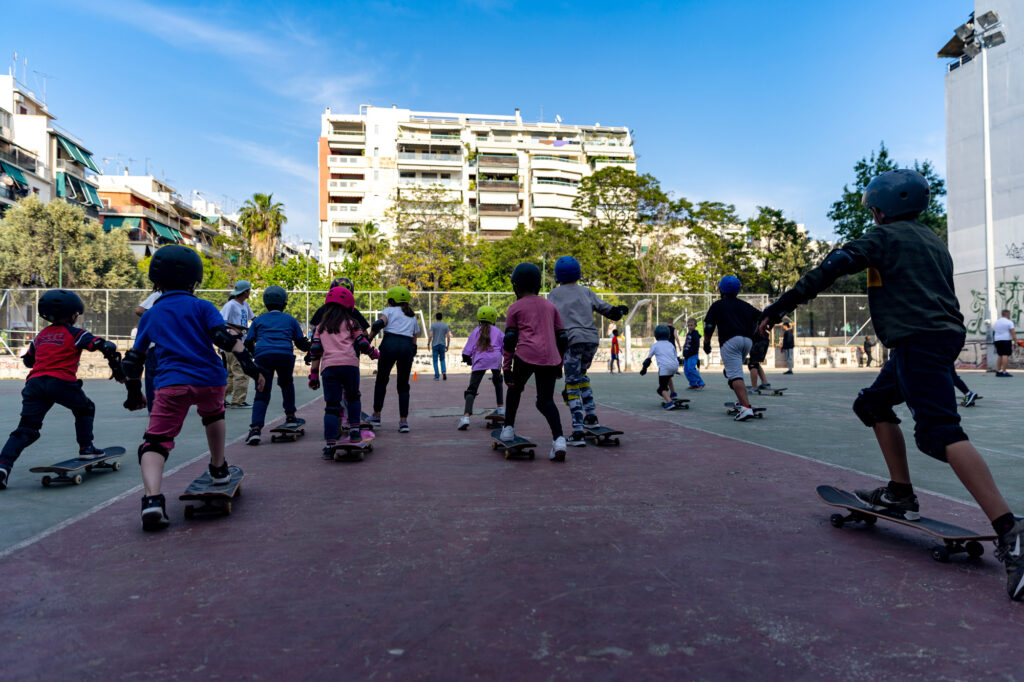
As skaters, we know movement. We know what it means to fall and get back up, to carve paths where none existed before. Skateboarding teaches a kind of freedom that is physical, creative and social. It teaches community, the kind that does not ask where you come from, only that you roll together. It is precisely for these reasons that skateboarding is used as a tool for social development. To improve well being, empowerment, a sense of belonging and strengthen social cohesion in neighbourhoods. This is why social skateboarding organisations exist.
Yet for many of us, freedom of movement remains a privilege, not a right. Internationally, skateboarding still lacks representation. Mobility discrimination, restrictive visa regimes, lack of awareness, and too often a refusal or inability to challenge these systems mean that many voices from the SWANA region and Global South remain excluded from global skate narratives. The very communities we seek to empower locally, through skateboarding, are those least represented internationally. Freedom is celebrated in theory, while access to it remains uneven in practice.
This contradiction exists across many subculture spaces (music, art, street culture, dance etc.) that have the power to unite people across differences, but that too often reproduce the same exclusions imposed by borders. When these spaces fail to confront injustice, they risk becoming spaces of symbolism rather than transformation.
If skate culture truly stands for unity, resistance and self expression, it must also stand against the systems that silence parts of our global community. Skate collectives and communities, companies, cultural institutions and individuals need to recognise mobility inequality as a form of injustice, one that shapes who gets seen, who gets invited, and who is allowed to dream beyond their surroundings.
Greece, Borders and the Cost of Exclusion
Greece sits at the crossroads of continents, a place shaped by migration and displacement for centuries. Its history carries deep memories of exile and refuge, from Asia Minor to Cyprus, from political refugees to more recent arrivals fleeing war, poverty and persecution. Yet despite this legacy, Greece has become one of the most restrictive borders in Europe, where movement is tightly controlled, racialised and often criminalised. These policies, and the racism that underpins them, does not stop at the borders, they shape everyday life inside the country, determining who can participate and belong.
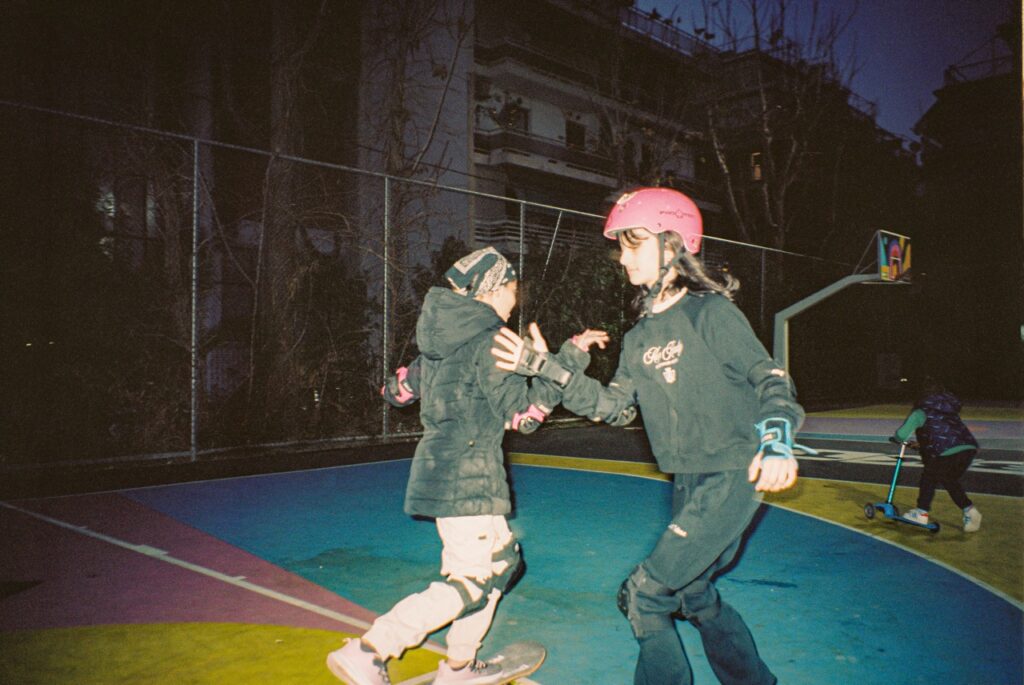
In Athens, this contradiction is lived daily. Cultural diversity and coexistence is both visible and invisible. Children born into families originating from Syria, Nigeria, Morocco and elsewhere grow up in the city, yet face many systemic barriers, such as lack of citizenship, limited access to education and social services, restricted opportunities, and exclusion from cultural spaces. Racism here is not only social, it is institutional, embedded in laws and policies that control mobility, restrict participation, and determine who is seen as “deserving” of presence and opportunity.
Visa refusal illustrates this reality, as mentioned, artists, students, and cultural practitioners from the Global South face disproportionately high rejection rates. The consequences are far reaching. Young people rarely see skaters, artists, or creatives from their own communities represented nationally or internationally. They do not see the preparation, persistence, the numerous applications, the repeated refusals and the resilience required to access these opportunities, they only experience absence and invisibility. They internalise the message that their creativity and ambitions are undervalued.
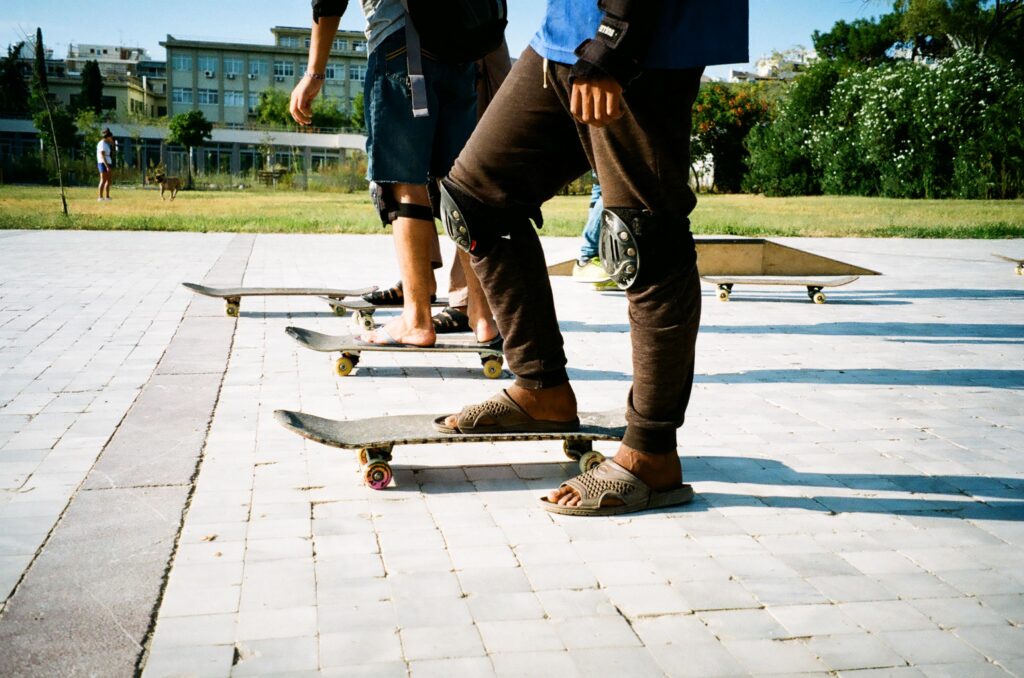
The impact extends beyond the individuals denied entry. Barriers hinder opportunities for social cohesion, limit cross cultural exchange, and reduce the chance for young people to form meaningful connections through subcultures and across communities. When youth cannot meet, collaborate, or be seen, the collective creativity, inspiration, and mutual support that emerge from these interactions are stifled. This lack of connection deepens feelings of alienation, weakens a sense of belonging, and can negatively affect mental health. At its core, entire communities lose the chance to participate, learn and grow together when talent and ambition are judged not by skill or creativity, but by the power of one’s passport.
Opportunities for mobility, cultural exchange, and representation are essential, not only for empowerment, learning, skill development, and community building, but for social justice itself. By enabling artists and skaters to travel, share their work, and connect internationally, we can confront systemic inequalities, challenge stereotypes and racism, counter misinformation, promote empathy, and expand what young people believe is possible for themselves.
Projects like ours exist to directly challenge these inequalities, make visible the creativity suppressed by systems of exclusion, create spaces for connection and skills building, and to insist that opportunity, representation and mobility should be rights, not privileges.
A Commitment
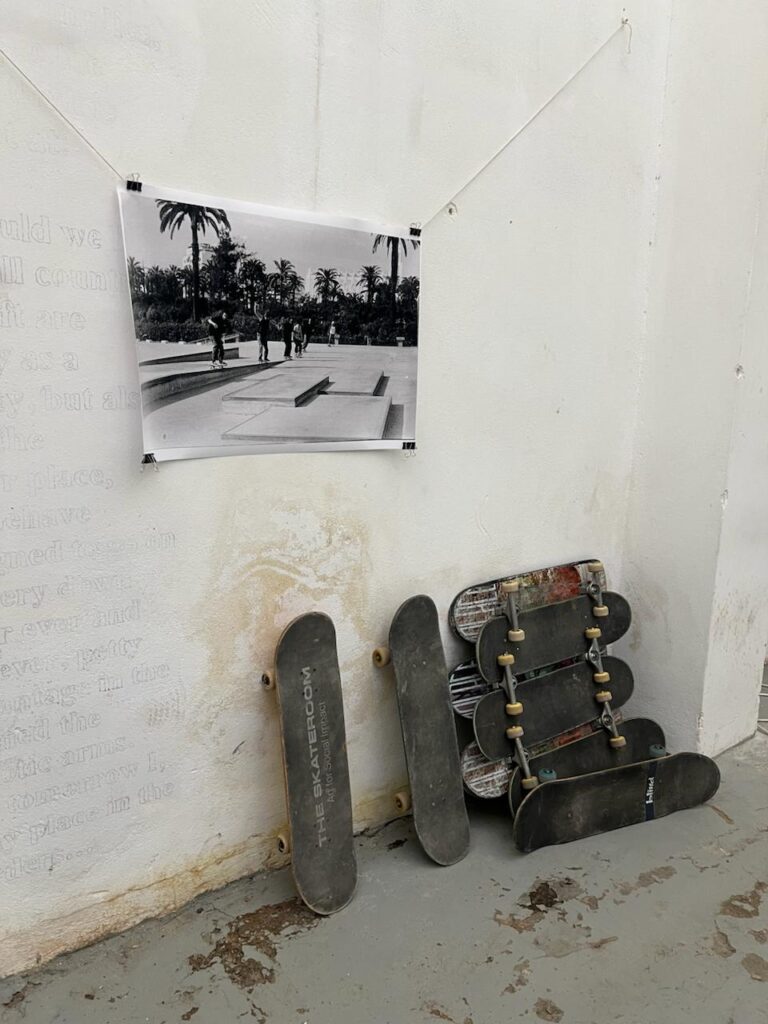
This is for all those whose talent, creativity and voices are blocked by borders or systemic discrimination. You are seen, you are heard and your stories matter. We will continue working towards representation, building bridges, collaboration and solidarity, until mobility and opportunity are rights, not privileges.
We will keep skating, creating and moving, even when the world tells us we cannot.
Breaking Barriers, Building Bridges is a community-based action part of the Mediterranean Youth in Action programme, implemented by the Anna Lindh Foundation. The programme serves as a platform for young community leaders to realise grassroots initiatives that inspire community-led solutions to address home needs and promote inclusion across the Euro-Med region.