

Mental health refers to a person’s overall emotional, psychological, and social well-being. It encompasses how we think, feel, and behave, and it influences how we handle stress, relate to others, and make choices. Good mental health allows individuals to cope with the normal stresses of life, create solid relationships with others, and contribute to their community. Common factors affecting mental health include biological factors such as genetics, brain chemistry, and physical health. Life changing experiences such as trauma, abuse, stress, and life transitions (e.g., loss of a loved one, constant job changes) are tremendously important contributors. Additionally, environmental factors, for example family dynamics, cultural background, social support, and socioeconomic conditions can also impact mental health.
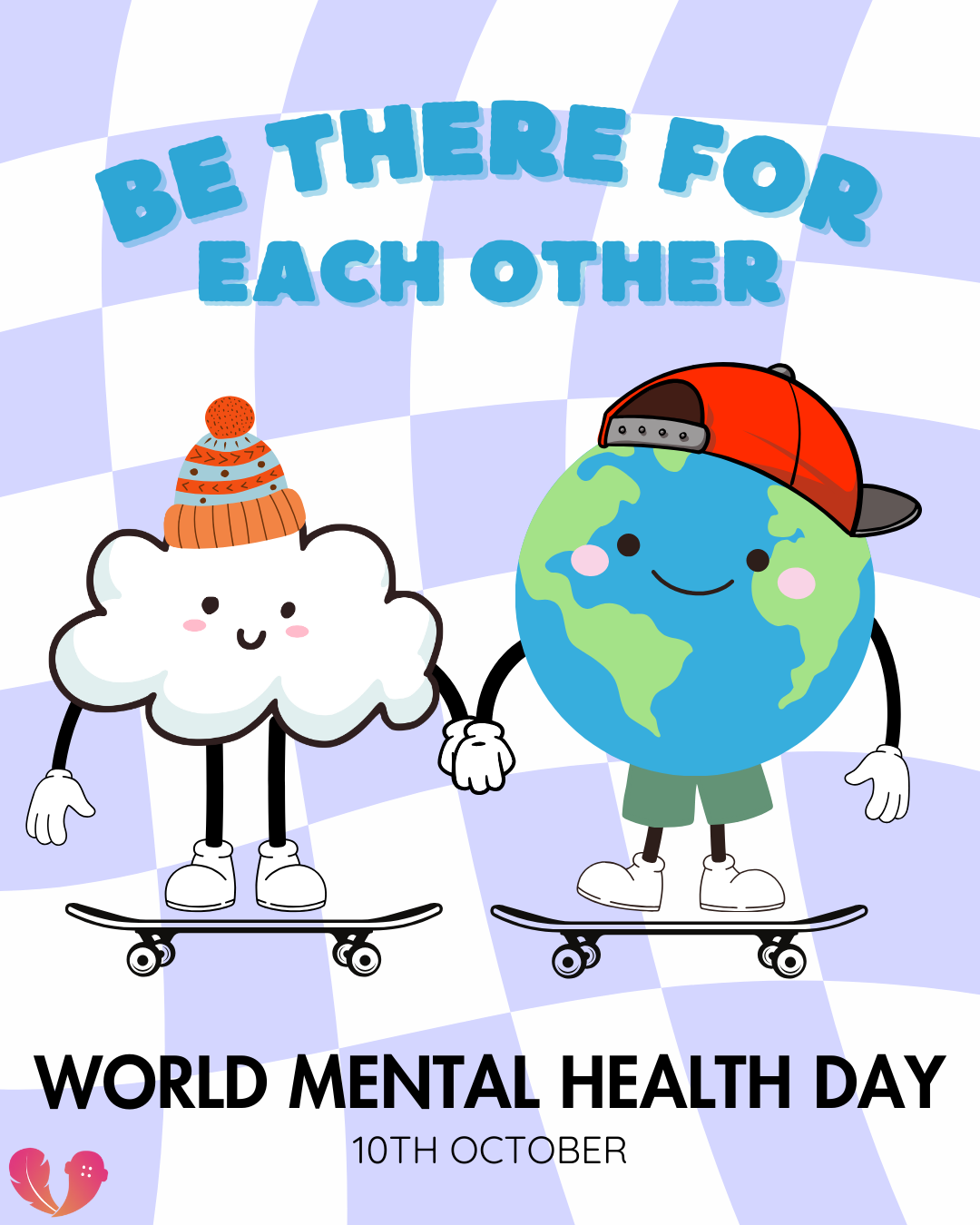
According to the World Health Organization, 10th of October is World Mental Health Day. The overall objective of World Mental Health Day is to raise awareness of mental health issues around the world and to mobilise efforts in support of mental health. The Day provides an opportunity for all stakeholders working on mental health issues to talk about their work, and what more needs to be done to make mental health care a reality for people worldwide. Mental health is a basic human right for all people. Everyone, whoever and wherever they are, has a right to the highest attainable standard of mental health. This includes the right to be protected from mental health risks, the right to available, accessible, acceptable, and good quality care, and the right to liberty, independence and inclusion in the community.
History of Mental Health
Ingrid G. Farreras states in the article entitled “History of Mental Illness” that general references to mental conditions can be found throughout history. The evolution of mental illness, however, has not been linear or progressive but rather cyclical. Whether a behaviour is considered normal or abnormal depends on the context surrounding the behaviour and thus changes as a function of a particular time and culture. In the past, uncommon behaviour or behaviour that deviated from the sociocultural norms and expectations of a specific culture and period has been used as a way to silence or control certain individuals or groups. As a result, a less cultural relativist view of abnormal behaviour has focused instead on whether behaviour poses a threat to oneself or others or causes so much pain and suffering that it interferes with one’s relationships with family and friends, and general responsibilities.
Modern treatments of mental conditions are most associated with the establishment of hospitals and asylums beginning in the 16th century. Such institutions’ mission was to house and confine the mentally ill, the poor, the homeless, the unemployed, and the criminal. War and economic depression produced vast numbers of “undesirables” and these were separated from society and sent to these institutions. It is undeniably proven that mental illness throughout history, in many cases, was a term imposed on people that were seen as dangerous for the political, religious and patriarchal systems. Those people were women suffering from “hysteria” rather than sexism, black people who were considered to have smaller brains according to racist doctors and biologists, or people with criminal genes and physical characteristics according to Italian criminologist Lombroso, whose concept of criminal atavism was more than questionable.
According to Farreras, progress in the treatment of mental illness necessarily implies improvements in the diagnosis of it. A standardised diagnostic classification system with agreed-upon definitions of psychological disorders creates a shared language among mental-health providers and aids in clinical research. While diagnoses were recognized as far back as the Greeks, it was not until 1883 that German psychiatrist Emil Kräpelin (1856–1926) published a comprehensive system of psychological disorders that centred around a pattern of symptoms (i.e., syndrome) suggestive of an underlying physiological cause. Other clinicians also suggested popular classification systems but the need for a single, shared system paved the way for the American Psychiatric Association’s 1952 publication of the first Diagnostic and Statistical Manual (DSM).
While the DSM has provided a necessary shared language for clinicians, aided in clinical research, and allowed clinicians to be reimbursed by insurance companies for their services, it is not without criticism. The DSM is based on clinical and research findings from Western culture, primarily the United States. It is also a medicalized categorical classification system that assumes disordered behaviour does not differ in degree but in kind, as opposed to a dimensional classification system that would plot disordered behaviour along a continuum. Finally, the number of diagnosable disorders has tripled since it was first published in 1952, so that almost half of Americans will have a diagnosable disorder in their lifetime, contributing to the continued concern of labelling and stigmatising individuals struggling with mental conditions.

The Stigma
Mental health stigma refers to the negative attitudes, beliefs, and prejudices that society holds about people with mental health conditions. It can manifest as discrimination, fear, and misunderstanding, which discourages individuals from seeking help or discussing their mental health challenges openly. Stigma often exacerbates the difficulties faced by people with mental illness, leading to feelings of isolation, shame, and a lack of support. Social, self and institutional stigma can result in reluctance to seek help, isolation and loneliness, reduced opportunities and negative impact on recovery.
People struggling with mental conditions are often stereotyped as dangerous, weak, or unpredictable. These misconceptions can result in discrimination in various aspects of life, including employment, healthcare, and social relationships. They may feel ashamed, unworthy, or weak because of their mental health struggles, which can reduce self-esteem, worsen their condition, and make them less likely to seek treatment.
Last but definitely not least, in countries like Greece where we have limited access to mental health services, inadequate mental health coverage in insurance plans, or employment discrimination, the stigmatisation of people with mental health conditions is inevitable. Additionally, the bill that the government has passed in July 2024, including the potential shutting down of Greece’s two largest public psychiatric hospitals (Psychiatric Hospital of Athens “Dafni” and Psychiatric Hospital of Thessaloniki), the structure of public rehab centres (KETHEA, 18 ANO, OKANA etc.) that is going to change massively, treatment programs in the field of drug addiction that are being abolished, social phenomena such as juvenile delinquency that are going to be medicalized, and the final act of the privatisation of mental health in the country, results to hopelessness.

So what about skaters and mental health?
Zane Foley states in the article “How can skateboarding help your mental health?” that skateboarding has amazing physical and mental health benefits but skaters too often like to pretend skateboarding is all they need. That while, yes, for many of them, being 10 to 15 years old and using skateboarding as an escape, greatly impacted, even potentially saved some lives. However, as we get older and life creates new challenges, skateboarders are not impervious to life’s obstacles and every now and then, just like rehabbing a skate injury, they need help getting back to full strength.
Everyone involved in the skate community is familiar with Ben Raemers’ case. In May 2019, at the age of 28, professional skateboarder Ben Raemers died by suicide. Through seeing the sadness left behind and the desire from the community to support an ongoing project, The Ben Raemers Foundation was formed. The overall aim of the foundation is to provide a way to maintain Ben’s legacy and help prevent any more loss to suicide. Initiatives like the Ben Raemers Foundation aim to enable the skateboarding community to have opportunities to develop the skills and tools needed to support each other to understand and address mental health. Suicide is a preventable death, so it is something everyone can work together to do and save lives.
Maintaining mental health is essential for overall well-being. Poor mental health can affect relationships, work performance, physical health, and one’s ability to enjoy life. Just like physical health, mental health can fluctuate and needs attention, care, and, when necessary, professional support. Effective mental health care may include therapy, counselling, medication, lifestyle changes, and community support. But above all, love for one’s self.
To bring awareness regarding Mental Health, we would like to urge you to visit the Ben Raemers Foundation website as well as their instagram account, to educate yourself about mental health issues that might concern you or people close to you. And remember to take care.