
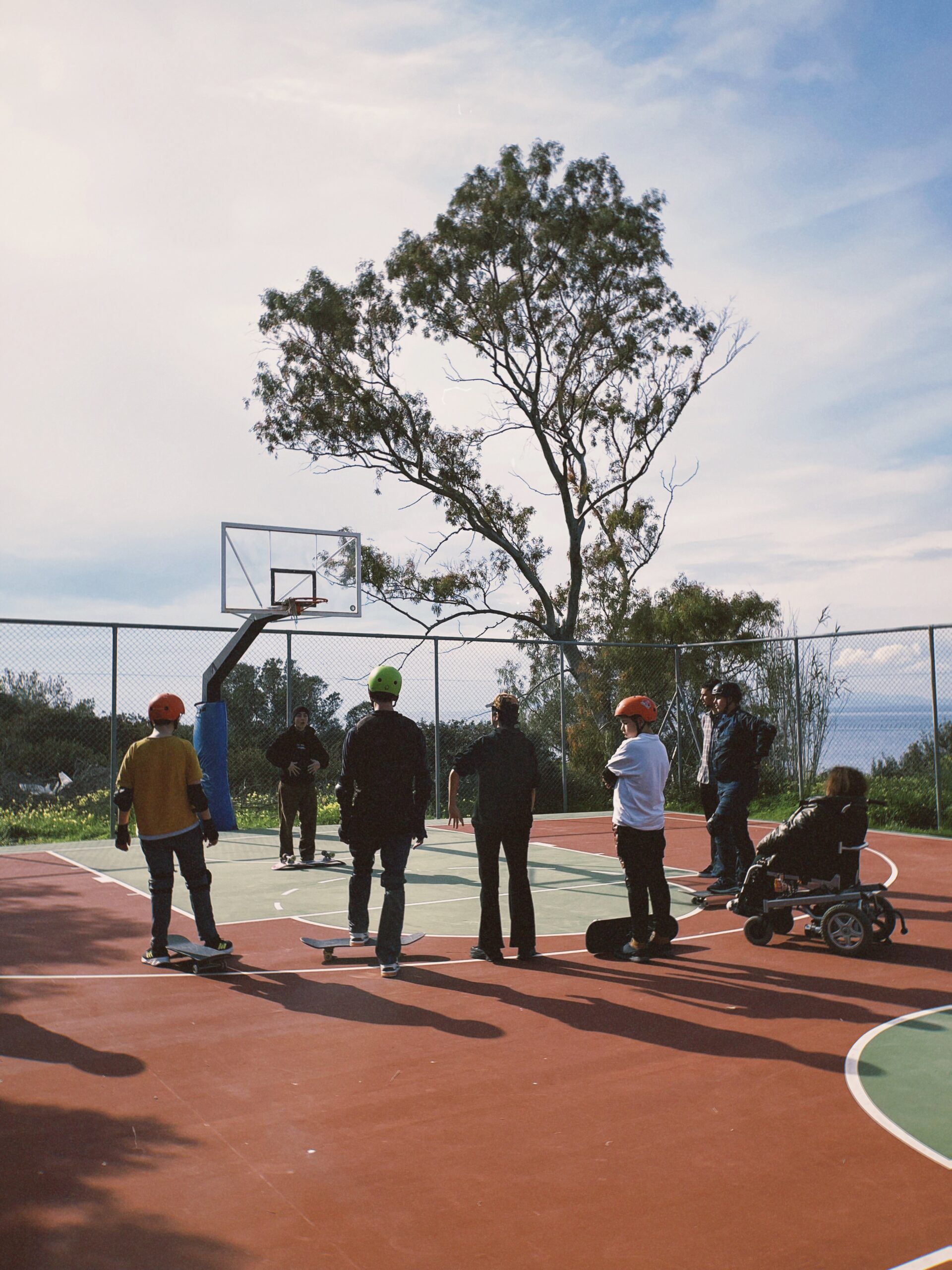
Some thoughts on inclusive spaces & practices
The International Day of Persons with Disabilities (IDPD) is a United Nations observed day celebrated every year on 3 December. The day promotes the rights and well-being of persons with disabilities at every level of society and development, while also raising awareness of their situation in all aspects of political, social, economic, and cultural life.
A disability is a physical, sensory, cognitive, or mental condition that can affect how a person moves, senses, communicates, learns, or interacts with the world. Disabilities may be congenital (present from birth) or acquired later in life, and they can be temporary, episodic, or permanent.
Visible disabilities are those that are noticeable to others, often showing physical or outward signs that indicate a person may have different needs or abilities. Non-visible disabilities, on the other hand, are not immediately apparent. People with such conditions may appear able-bodied but still face significant challenges.
Not all disabilities can be seen — which is why inclusive environments must account for both visible and invisible disabilities, while respecting each individual’s right to disclose or not disclose their condition. True accessibility means addressing all barriers; physical, sensory, social, and digital.
Women and Persons with Disabilities in the European Union and Greece
Persons with disabilities continue to face multiple challenges across Europe:
- 1 in 2 feels they experience discrimination
- Nearly 1 in 5 is unemployed
- 1 in 3 is at risk of poverty or social exclusion
- 1 in 5 leaves school early
- They are four times more likely to have unmet healthcare needs
- 1 in 5 experiences violence
According to Eurostat women with disabilities represent 21.4% of all women and 60.9% of all persons with disabilities in Greece. In total, 11% of the Greek population are women with disabilities, as reported by the Digital Portal for Persons with Disabilities.
In 2023, 27% of the European Union (EU) population aged over 16 had some form of disability. According to Eurostat estimates, this equals approximately 101 million people, or 1 in 4 adults across the EU.That same year, the percentage of women with disabilities was higher than that of men in every EU Member State. On average, 29.2% of the total female population in the EU had a disability, compared with 24.3% of the total male population.
Inclusive Spaces
The Cool Crips, Spyros and Grigoris, two young disabled men from Komotini and Athens are the founders of Cool Crips A.M.K.E., a social enterprise with a bold mission: to make disability mainstream and to increase the visibility of disabled people. They pursue this goal with a blend of coolness, humor, and self-irony, challenging stereotypes through their creative projects and public presence.
On their website, they pose a simple but powerful question: “Have you ever wondered why you don’t see disabled people out there — on the streets, in workplaces, in restaurants, in bars?”
It is certainly not because they don’t exist; statistics show that around 15% of the population are people with disabilities.
So what is the answer to that question? Barriers.
Barriers can be architectural (e.g., stairs or narrow spaces), social (e.g., stereotypes or prejudice), or digital (e.g., inaccessible websites). The Cool Crips work to break down these barriers and create environments where access is equal, inclusive, and unobstructed, and that is exactly what we all should strive for.
Inclusive spaces are environments that are accessible and accommodating to everyone, regardless of ability. This can be achieved through physical modifications, such as ramps and automatic doors, and sensory considerations, like clear signage and auditory signals. Inclusive design also fosters a sense of belonging, supported by measures such as advanced technology, staff training, and emergency preparedness plans. Still, we can go even further, by being creative, proactive, and ambitious in making inclusion a lived reality.
Skateboarding Sessions for Participants with Disabilities
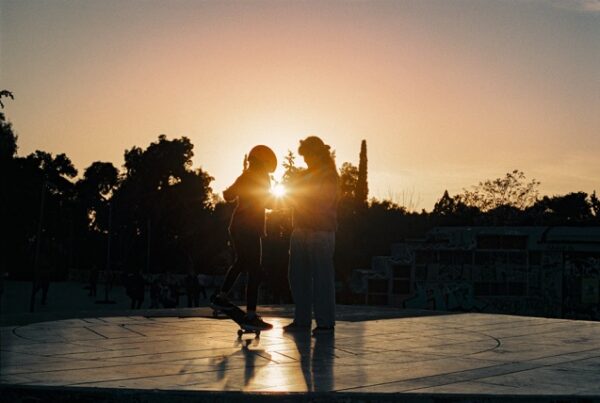
One of FMS’s goals by the end of last year was to become more inclusive toward participants with disabilities. Because it can be challenging to adapt skate sessions in public spaces where accessible infrastructure is limited, we decided to network with special needs schools and residential care units that might be interested in collaborating.
Since November 2024, we have maintained a partnership with the Special Needs Elementary School in Zefyri, and in February 2025, we held our first session at PIKPA Voulas (Rehabilitation & Recovery Unit for Children with Disabilities).
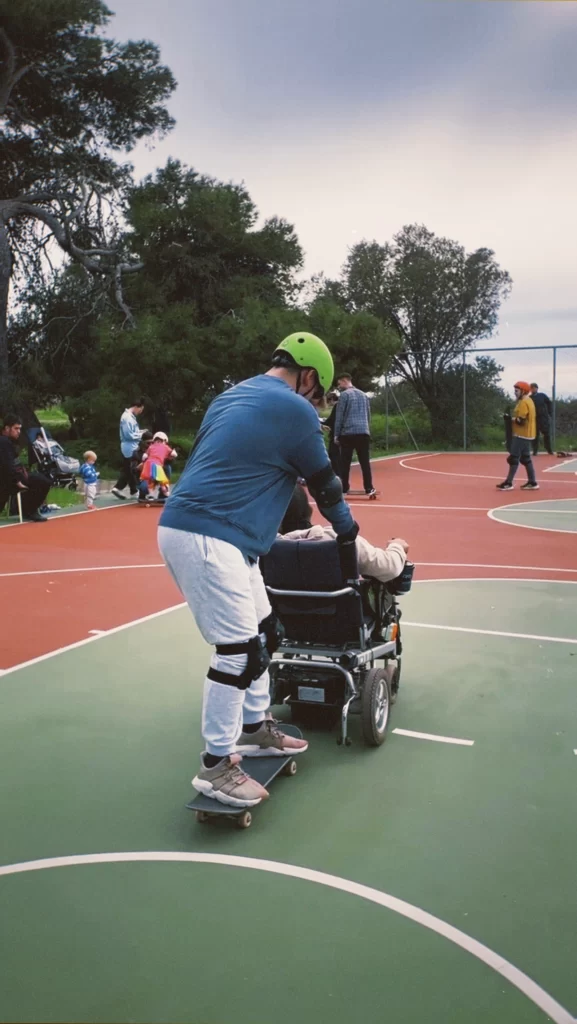
Since then, we have established a steady collaboration with both institutions — providing monthly sessions at the Special Needs Elementary School in Zefyri and regular activities at PIKPA Voulas. To date, a total of 30 unique participants have taken part, all of whom greatly enjoy the FMS sessions.
Building an inclusive society requires more than awareness; it calls for action, empathy, and commitment. From international observances like the IDPD to local initiatives, every effort contributes to a world where people of all abilities can participate equally. True inclusion means designing spaces, systems, and attitudes that celebrate diversity, remove barriers, and empower everyone to thrive. Accessibility is not merely an accommodation — it is a reflection of our shared humanity.
Building an inclusive society requires more than awareness — it calls for action, empathy, and a commitment to removing barriers so people of all abilities can participate equally. At Free Movement Skateboarding, we are exploring new adaptive session approaches and learning alongside participants to understand what truly works in their context. Not every lesson goes perfectly to plan, but each one teaches us more about how to design accessible, empowering experiences that celebrate diversity and reflect our shared humanity. The joy we witness reminds us why inclusion matters, and we are excited to continue this journey as we prepare to share our insights in 2026, with the hope that children with disabilities everywhere can discover the freedom and empowerment of skateboarding.