
June again…
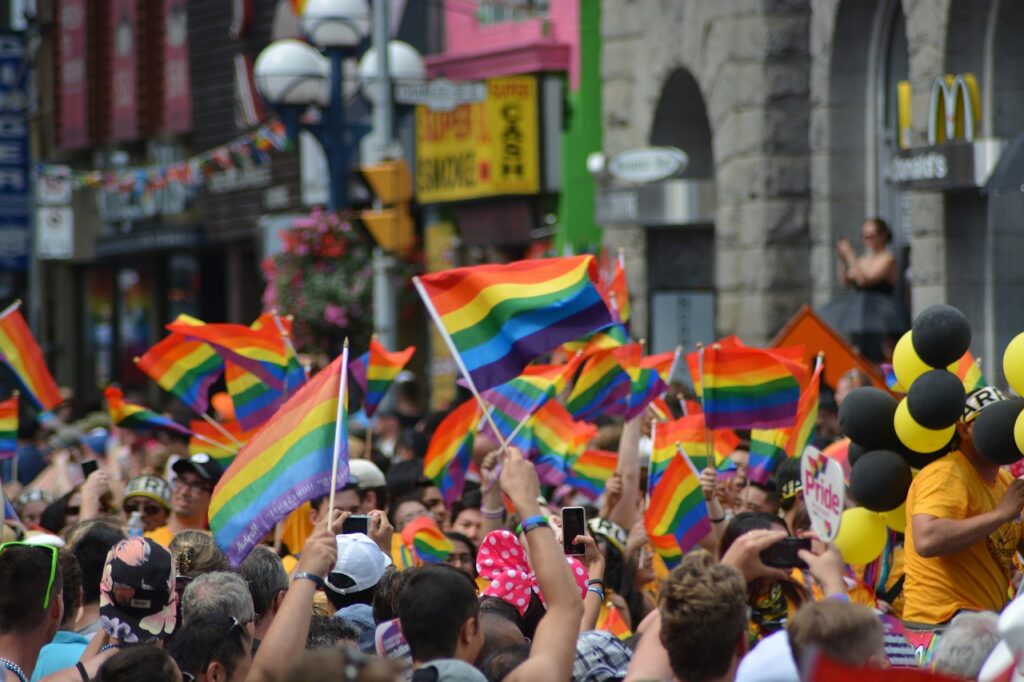
June has come again, and it is not only hot but full of pride. Why pride? Well, Lesbian, Gay, Bisexual, Transgender and Queer (LGBTQ) Pride Month is currently celebrated each year in the month of June to honour the 1969 Stonewall Uprising in Manhattan. The Stonewall Uprising was a tipping point for the Gay Liberation Movement in the United States, and it began in the early hours of June 28, 1969 when New York City police raided the Stonewall Inn ― a gay club located in Greenwich Village in New York City. The raid sparked a riot among bar patrons and neighbourhood residents as police roughly hauled employees and patrons out of the bar, leading to six days of protests and violent clashes with law enforcement outside the bar on Christopher Street, in neighbouring streets and in nearby Christopher Park. The Stonewall Riots served as a catalyst for the gay rights movement in the United States and around the world.
To delve a bit more into this historical movement during the last two centuries, in 1924, Henry Gerber, a German immigrant, founded in Chicago the Society for Human Rights, the first documented gay rights organisation in the United States. During his U.S. Army service in World War I, Gerber was inspired to create his organisation by the Scientific-Humanitarian Committee, a “homosexual emancipation” group in Germany. Gerber’s small group published a few issues of its newsletter “Friendship and Freedom,” the country’s first gay-interest newsletter. Police raids caused the group to disband in 1925, but 90 years later, the U.S. government designated Gerber’s Chicago house a National Historic Landmark. The gay rights movement stagnated for the next few decades, though LGBTQ+ individuals around the world did come into the spotlight a few times.
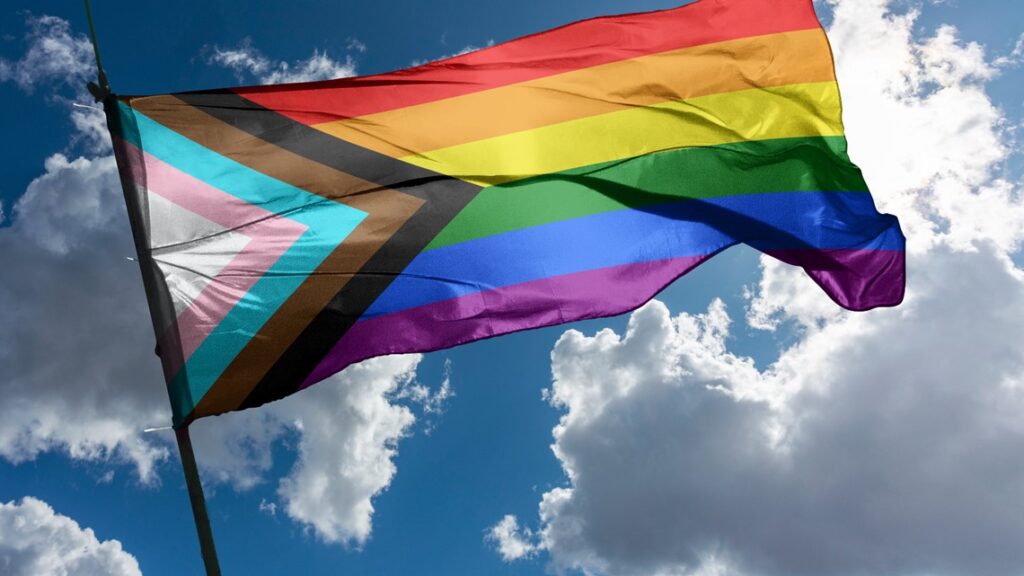
During World War II, the Nazis held homosexual men in concentration camps, branding them with the infamous pink triangle badge, which was also given to sexual predators. On the other hand, the inverted black triangle was an identification badge used in Nazi concentration camps to mark prisoners designated asozial (antisocial) and arbeitsscheu (work-shy). The Roma and Sinti people were considered asocial and tagged with the black triangle. The designation also included alcoholics, beggars, homeless people, nomads, sex workers, and violators of laws prohibiting sexual relations between Aryans and Jews. Lesbian women were also deemed to be anti-social, marked with the black triangle as well. Although the Nazi camps are a distant memory (we hope), for decades and decades in the modern ages queer people thought to be deranged, enemies to the heteronormative society, mentally ill, and classified in the DSM (the official psychiatric handbook of mental disorders). Regarding this, in the context of Psychiatry APA removed homosexuality from the DSM only in 1973 based on the new scientific studies, opening the way for new understanding of the LGBTQ individuals. Queer people have suffered not only Nazi camps, but also psychiatric treatment, along with education within christian camps and conversion “therapies” up until now.

LGBTQ+ Political Victories
The increased visibility and activism of LGBTQ+ individuals in the 1970s helped the movement make progress on multiple fronts. In 1977, for instance, the New York Supreme Court ruled that transgender woman Renée Richards could play at the United States Open tennis tournament against other female athletes. Additionally, several openly LGBTQ+ individuals secured public office positions: Kathy Kozachenko won a seat to the Ann Harbor, Michigan, City Council in 1974, becoming the first out American to be elected to public office. Harvey Milk, who campaigned on a pro-gay rights platform, became the San Francisco city supervisor in 1978, and the first openly gay man elected to a political office. Milk asked Gilbert Baker, an artist and gay rights activist, to create an emblem that represents the gay rights movement and would be seen as a symbol of pride. Baker designed and stitched together the first rainbow flag, which he unveiled at a pride parade in 1978. The following year, in 1979, more than 100,000 people took part in the first National March on Washington for Lesbian and Gay Rights.
Outbreak of AIDS
The outbreak of AIDS in the United States dominated the struggle for gay rights in the 1980s and early 1990s. In 1981, the Centers for Disease Control and Prevention published a report about five previously healthy homosexual men becoming infected with a rare type of pneumonia. By 1984, researchers had identified the cause of AIDS — the human immunodeficiency virus, or HIV — and the Food and Drug Administration licensed the first commercial blood test for HIV in 1985. Two years later, the first antiretroviral medication for HIV, azidothymidine (AZT), became available. Gay rights proponents held the second National March on Washington for Lesbian and Gay Rights in 1987. The occasion marked the first national coverage of ACT UP (AIDS Coalition To Unleash Power), an advocacy group seeking to improve the lives of AIDS victims. Although the first people who got diagnosed with HIV-AIDS were homosexuals, they got the virus because of unprotected sex, as numerous other straight people later on, who did not want any association with the movement because of homophobic beliefs that exist to this day. The World Health Organization in 1988 declared December 1 to be World AIDS Day.
So what do queers have to do with skating?
Skateboarding has been thought to possess a certain alternative ‘potential’ to challenge prevalent inequalities in sport. However, skateboarding remains a largely hetero-masculine domain. As such, queer identities have been marginalised and relegated to a peripheral space. Nevertheless, radical scenes of young queer skateboarders are offering alternative definitions and possibilities for what it means to be a skateboarder and do skateboarding. Through Jack Halberstam’s concept of queer failure and José Esteban Muñoz’s queer futurity and utopianism, Bethany Geckle and Sally Shaw investigated in their research how queer skateboarders are tapping into a queer potential that persists in the practice and aesthetic of skateboarding through the symbolism of the child and camp. They use this potential to affirm their identities as simultaneously queer and skaters. In so doing, today’s young queer skateboarders are changing the landscape of skateboarding by queering and claiming space for themselves within the largely heteronormative dominant industry and culture.


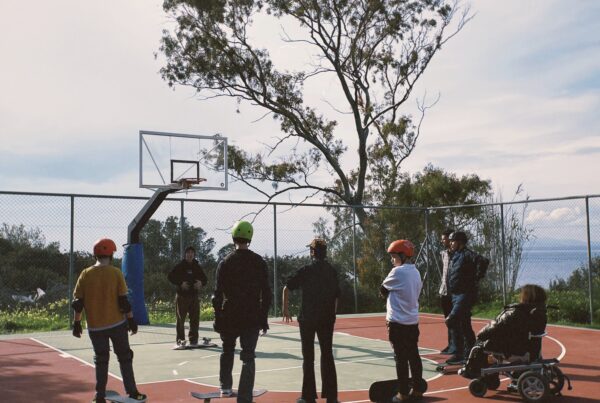
Isolation is dangerous for the queer community in light of book bans, the Florida’s so-called “Don’t Say Gay” law, bans on gender-affirming care for trans youth, and so forth, so it is crucial and vital to create networks and build active communities around the world, and definitely in the Athenian scene as well. As we have said many times, in FMS we aim to empower alternative forms of skateboarding, particularly girl skateboarding, which has only emerged in recent years in the local skate scene but also advocate for queers on wheels too. Over the past years we held various events that promoted women empowerment, both amongst our participants but also amongst the local skate scene and the number of girls who are skating in Athens has been increasing tremendously. This future includes also LGBTQ+ skaters, thus we are here to ensure they feel first of all welcome and safe while having fun on their board during our sessions.
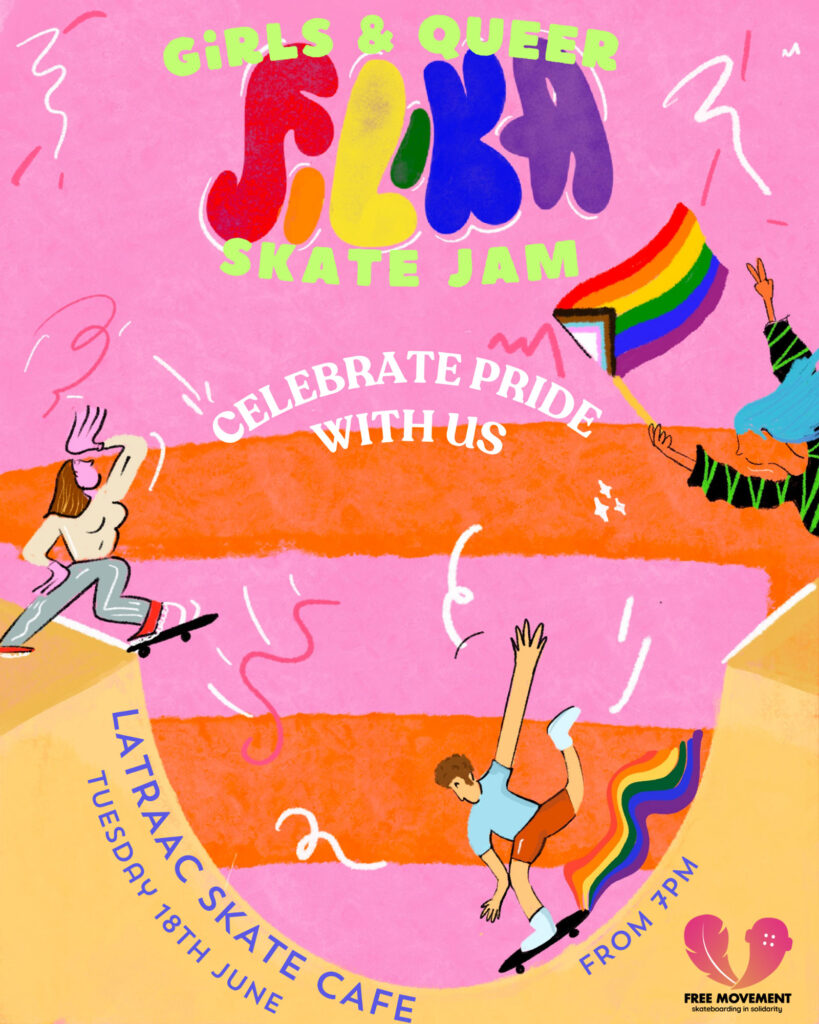
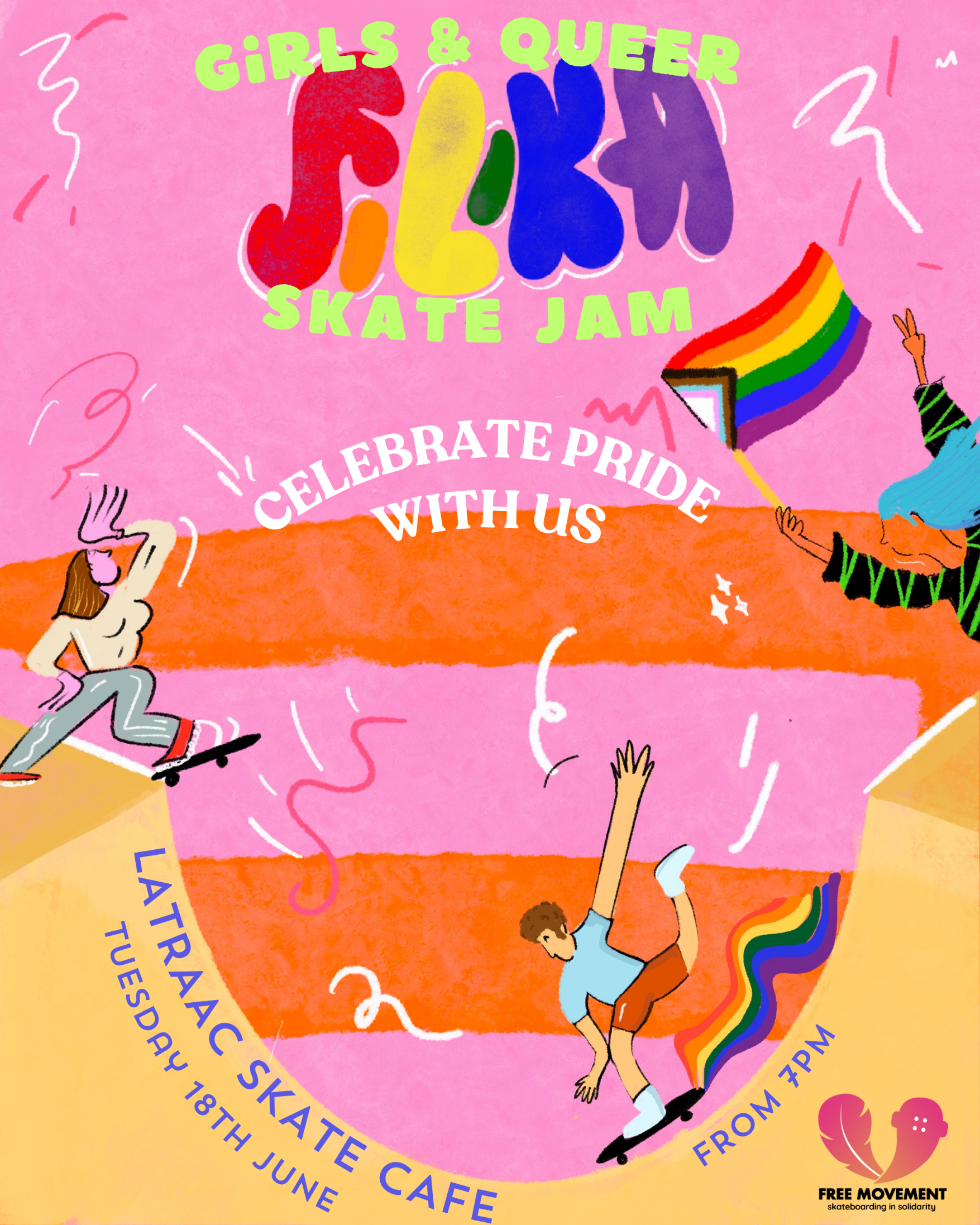
To celebrate the pride month and the gay rights movement, this article apart from sharing historical information and advocating for the gender queer and non-traditional skaters within the Athenian skate scene, is also again an open call to join us on the 18th of June at 19.00 p.m. @Latraac Skate cafe, so we can have a free entrance skate jam and celebrate together. Bring your deck (and if you do not have one we will be providing boards along with pads), bring your friends, bring your pride and come spend some time with us.